Orlando Dreamers Advance Vision for Major League Baseball Team, Citing Tourism and Market Growth
An organization dedicated to bringing an MLB team to Central Florida highlights the region's unique demographics and economic advantages as key factors for success.
Sports·
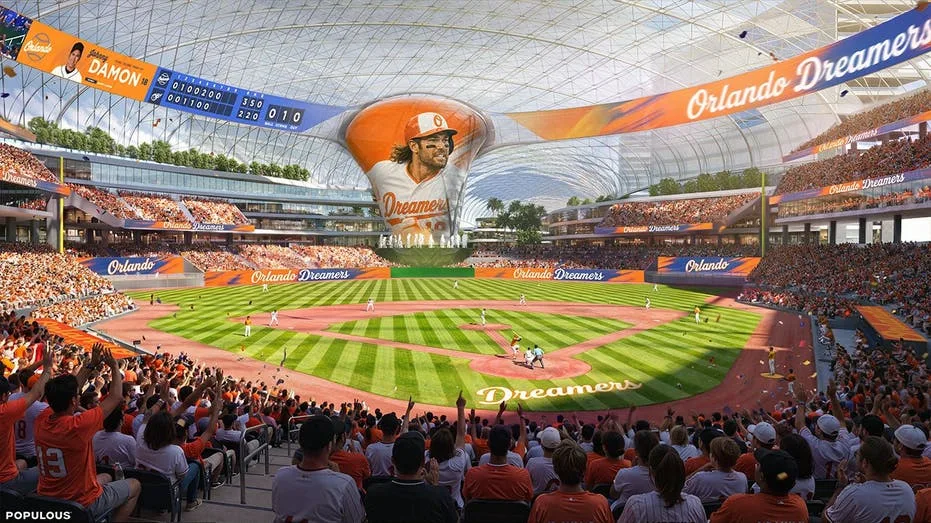
Orlando, Florida, is widely recognized globally for its expansive theme parks, which attract tens of millions of visitors annually, cementing its status as one of the world's most frequented cities. This robust tourism infrastructure, among other factors, forms the core of the argument presented by the Orlando Dreamers, an organization advocating for a Major League Baseball team in the Central Florida metropolis.
While discussions around MLB expansion frequently highlight cities like Nashville and Charlotte, Jim Schnorf, co-founder and COO of the Dreamers, asserts that Orlando possesses compelling attributes that position it favorably to secure a team.
"We have no Major League Baseball here. We don't have minor league, and we don't have spring training," Schnorf explained. "Every other competing city except one has Triple-A, and the one that doesn't have Triple-A has Double-A. So there's an anomalous absence of professional baseball from the Orlando market."
Orlando also stands out as the largest media market nationwide that currently lacks a Major League Baseball presence.
Beyond its media market size, the city's tourism appeal remains a central point of the Dreamers' case.
"We're the most visited destination in the Western Hemisphere, with over 80 million tourists this year," Schnorf noted. "Tourism matters a lot. Anyone who doesn't believe that merely needs to look at the Las Vegas model."
Schnorf, who initiated the Dreamers' efforts with the late Pat Williams—a long-time NBA executive instrumental in establishing the Orlando Magic—referenced Las Vegas's rapid ascent in professional sports. Within approximately a decade, Las Vegas transitioned from having no teams in the Big Four professional leagues to nearly hosting all of them. Schnorf cited the success of the Vegas Golden Knights and the relocation of the Las Vegas Raiders as examples of how a city with a predominant tourism industry can effectively support major league franchises.
"So tourism matters immensely when it comes to the success of sports," he affirmed.
Tourism can also play a crucial role in funding such ventures.
A Vision for a State-of-the-Art Venue
The organization recently unveiled new conceptual renderings for a cutting-edge stadium. This proposed facility would be situated on land near SeaWorld, conveniently located just off I-4, the primary artery traversing the Orlando metropolitan area.
The Dreamers envision leveraging a portion of the tourism resort tax revenue generated by Orange County, Florida, to help finance the stadium's construction.
"Orlando generates the most tourism resort tax of any metro area in the country, which can be used for tourism, sports facilities, convention centers, and so forth," Schnorf stated.
However, despite the comprehensive proposal, a task force assembled to review various project funding requests, including the stadium, did not recommend moving forward with it.
Schnorf clarified that this outcome was not entirely unexpected, attributing it to the timing—occurring amidst an election cycle—and the constrained presentation format. The Dreamers had only fifteen minutes to present their extensive plan.
"We requested $975 million," he explained. "To put that in perspective, we got only 15 minutes to present that package. Normally, you would spend a minimum of a day, following months and months of work and research on our financial model and metrics."
Despite this setback, Schnorf confirmed that the Dreamers have already secured substantial private financial commitments for the project.
"We've got well in excess of $2 billion towards stadium financing and team acquisition in place under letters of intent," he disclosed.
Overcoming Regional Challenges
Even with a stadium plan and funding in place, securing an MLB franchise for Orlando faces the challenge of Florida already hosting two teams—the Tampa Bay Rays and the Miami Marlins—neither of which is consistently recognized for high attendance figures. This might suggest a difficult proposition for a third team in the state.
Nevertheless, Schnorf pointed to a significant historical precedent within baseball that suggests the viability of such a plan.
"People ask about the other two teams in the state, 'How can Florida possibly support a third team here?' Well, in 1969, California had five teams with a significantly lower population than the state of Florida has today," Schnorf highlighted. "Orlando is the fastest-growing metro area in the fastest-growing state in the country."
He concluded with strong confidence in the region's capacity:
"We can definitely support Major League Baseball here."
Related Stories
Chad Ochocinco Warns Deshaun Watson Faces 'Very Short' Leash, Potential Benchmarking by Week 3
Former NFL star Chad Ochocinco suggests Cleveland Browns quarterback Deshaun Watson has a "very short" leash entering the season. Ochocinco believes if the team starts 0-2, Watson could lose his starting position by
Sep 1
Ketel Marte Returns to Diamondbacks Lineup After Unexplained Absence, Addresses Teammates
Arizona Diamondbacks star Ketel Marte has returned to the team after an unauthorized two-week absence. He expressed remorse to his teammates, citing a moment of frustration, and was immediately reinstated into the
Sep 1
Texas Tech Coach Criticizes USC's Home Opener Attendance Amidst Broader College Football Discussions
Texas Tech's Joey McGuire commented on USC's sparse crowd at its recent home opener, drawing attention to factors like extreme heat, kickoff times, and local competition that influence game attendance, contrasting it
Sep 1
Former Pro Athletes Returning to College Spark Debate Among Coaches and Pundits
The return of former NFL players to college football is prompting widespread discussion. While some see the benefits for player development and team success, others raise concerns about fairness and the impact on
Sep 1