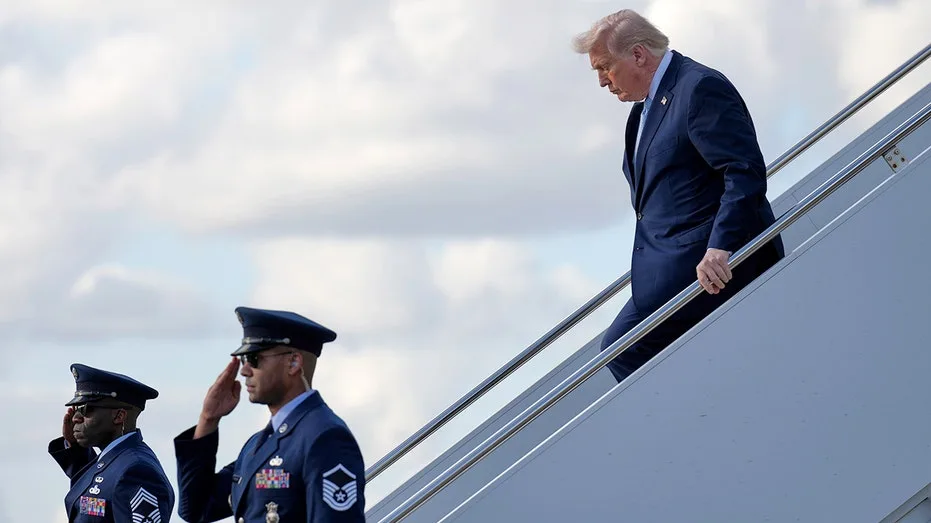
The Federal Aviation Administration (FAA) has put forth a proposal for permanent flight regulations in the vicinity of Donald J. Trump International Airport in Palm Beach, Florida. This initiative aims to fortify the airspace surrounding former President Trump's Mar-a-Lago residence, prompted by increasing apprehensions regarding unapproved aircraft and unmanned aerial systems (drones). However, some security specialists contend that these proposed rules may not be robust enough to deter malicious actors.
A spokesperson for the FAA confirmed the agency's actions, stating, "At the request of the U.S. Secret Service in the interest of national security, the FAA is proposing Special Air Traffic Rules for the airspace near Donald J. Trump International Airport (DJT)."
New Airspace Restrictions Proposed
The proposed regulatory framework involves the creation of a Special Flight Rules Area (SFRA). Within this designated zone, specific requirements would apply to aircraft operating below 2,000 feet and within one nautical mile. Such aircraft would be mandated to secure explicit clearance, maintain continuous two-way radio communication with air traffic control, and consistently transmit an assigned transponder code. Furthermore, both incoming and outgoing flights would need to satisfy stringent security criteria before being allowed entry into this restricted airspace.
Underlying Security Concerns
These enhanced security protocols are being considered in the wake of several documented threats against the former president. Notably, a plot in June involved five individuals who allegedly planned an ambush using drones laden with explosives. Their reported target was the former president and other high-ranking officials during the UFC Freedom 250 event held at the White House.
Expert Questions Efficacy of Current Approach
Despite these efforts, specialists in drone technology argue that relying solely on regulatory boundaries is "not good enough."
Security expert Velicovich emphasized the necessity for government bodies to accelerate the adoption of proactive interdiction technologies, rather than solely depending on demarcated airspace restrictions. He elaborated, "We're going to have to have more counter-drone systems in place because it is not good enough simply for the FAA to send a message saying this area is a no-drone zone. When you're a bad actor, that doesn't matter."
The FAA's proposal is currently open for public feedback, with the comment period concluding on October 2. When inquiries were directed to the White House regarding the security architecture, officials referred the matter to the U.S. Secret Service. The Secret Service did not offer immediate further comment on the situation.